Why the specification matters more than the swatch
Most safety shoe and work boot programmes start with a leather swatch. The swatch shows colour and grain, but it does not tell a tannery what thickness, print depth, finish adhesion or shade tolerance you will accept on a bulk lot. Without a written specification, the first bulk delivery often looks different from the sample you approved — and the difference only shows up when cutting starts.
This guide is for footwear product developers, sourcing teams and quality managers who have already decided that Barton print leather is the right upper for a safety shoe or industrial work boot line. It covers what to put in a purchase specification, how to brief a sample, and which checks to lock in before the first production order. For a side-by-side material comparison, see our guide to Barton print vs nubuck vs full-grain for safety shoe uppers. For lot-level QC after the leather arrives, use the Barton print leather inspection and testing guide.
What Barton print leather is, in buyer language
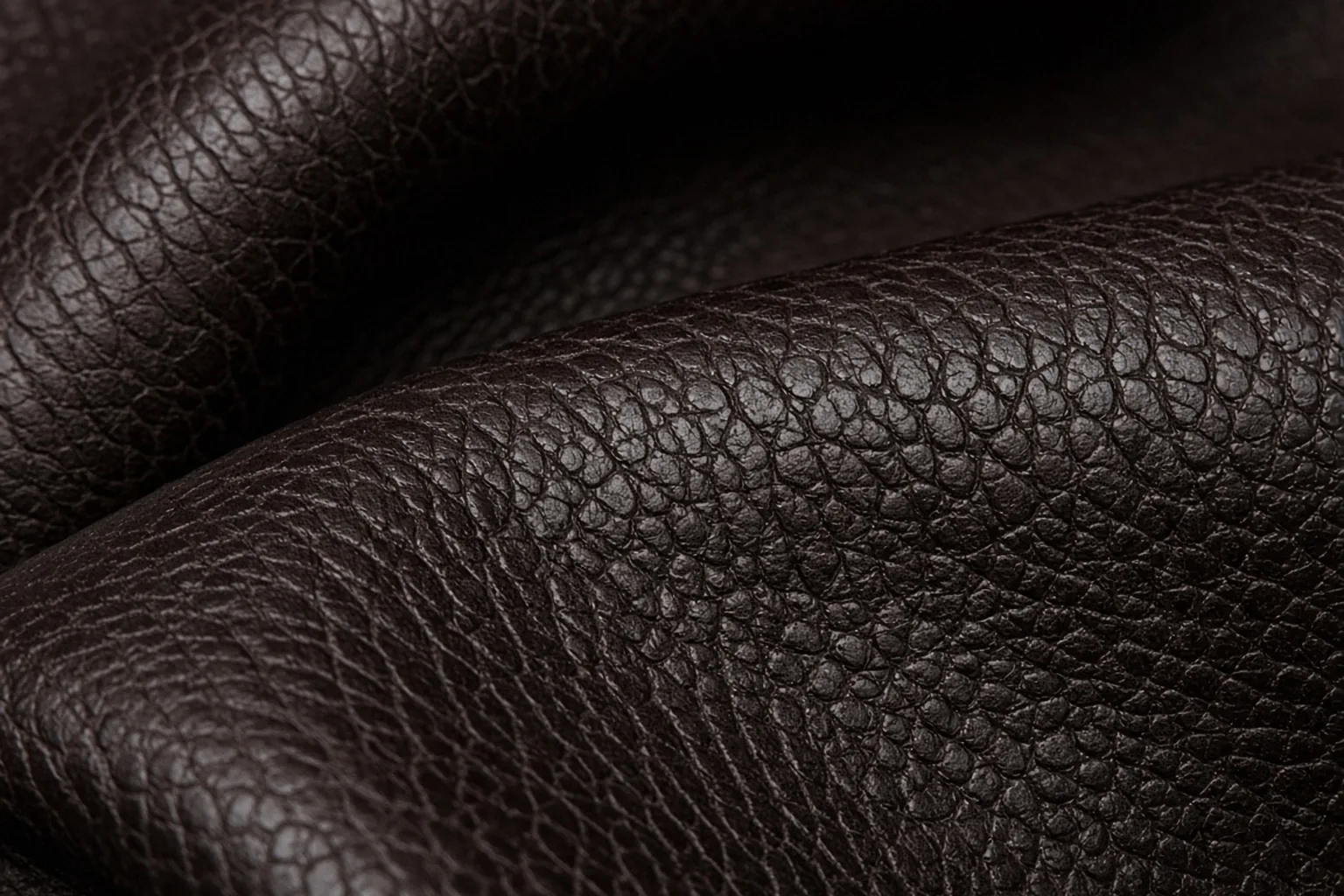
Barton print leather is buffalo leather finished with a printed and embossed decorative grain, usually under a pigmented top coat. The embossed pattern helps hide light surface marks and keeps large orders looking uniform — which is why it is widely used for safety shoe uppers, work boots and other industrial footwear. Urban Tuck supplies it as finished leather by the square foot from Kanpur, not as finished footwear. Typical applications and current order terms are listed on our leather for safety shoes page and the Barton product page.
Barton print is not a belt leather in this context. When you write the specification, describe the end use as safety shoes, work boots or industrial footwear so the finish and thickness are chosen for lasting and flex, not for strap cutting.
The fields every Barton print RFQ should include
A useful request for quotation (RFQ) or purchase specification does not need to be long. It does need to be unambiguous. Include at least the following fields, and keep the same wording from sample to bulk so the tannery is not guessing.
| Spec field | What to write | Why it matters |
|---|---|---|
| End use | Safety shoe upper / work boot upper / industrial footwear upper | Drives thickness, flex and finish choice |
| Leather type | Buffalo, Barton print (printed and embossed grain) | Prevents substitution with a different emboss or species |
| Thickness | Range in mm (for example 1.8–2.0 mm or 2.0–2.2 mm) | Affects lasting, toe stiffness and clicker yield |
| Colour | Pantone or physical master; shade tolerance band | Stops lot-to-lot drift across a season |
| Print / emboss | Named plate or master swatch reference; print depth note | Keeps the grain looking consistent under the finish |
| Finish | Pigmented / sealed; water-repellent if required | Defines cleanability and wet-work behaviour |
| Area and packing | Sold by sq ft; how hides are measured and packed | Controls invoice quantity and handling damage |
| Quantity | Sq ft per colour / print run | Matches tannery minimums and cutting plans |
| Delivery terms | Incoterm, port, lead time after sample approval | Aligns production and shipping calendars |
Urban Tuck’s published minimum for Barton print leather is 5,000 sq ft per colour and print run, with custom colour matching available on qualifying bulk orders. Thickness grades commonly discussed for safety uppers fall in the 1.8 mm to 2.2 mm band; confirm the exact range on your signed sample rather than relying on a catalogue alone.
How to brief the sample so bulk can match it
Ask for a cutting-sized sample, not only a hand swatch. A useful sample pack for Barton print safety-upper work usually includes:
- A master colour and print swatch large enough to judge emboss depth under raking light
- At least one full cutting panel so your clicker and lasting team can feel stiffness and stretch
- A written note of the measured thickness at several points on the panel
- The finish description in the same words you will use on the purchase order
- Any water-repellent or oil-rich treatment you expect on the bulk lot
Once you approve the sample, photograph it, label it with the order reference, and keep it as the signed master. Send a copy of that reference number on every follow-up order. If you change thickness, colour or print plate later, treat it as a new specification — do not silently amend the old one.
Matching the leather to the workplace
Barton print’s sealed, embossed surface suits abrasive, high-volume industrial use where boots must wipe clean and look consistent across a large workforce. It is a practical choice for many dry or lightly wet sites. For programmes that need a softer, more breathable feel, or a different wet-work behaviour, compare Barton print with water-repellent nubuck and smooth full-grain using the upper-leather comparison, and read the broader leather safety shoes guide for industrial buyers.
Write the workplace into the specification in plain language: dry warehouse, oily workshop, outdoor construction, cold store, and so on. That note helps the tannery propose a finish that fits the wearer’s day, instead of a generic “work boot” finish that looks right on a desk and fails after two weeks on site.
Checks to lock before the first bulk order
Before you release the first production quantity, agree the following with your supplier in writing:
- Master swatch control — one signed reference kept by you and one by the supplier
- Thickness tolerance — how many measurement points per hide and the acceptable range
- Shade and print tolerance — what variation across a lot is acceptable under agreed lighting
- Area re-measure — how hide area will be verified against the invoice
- Incoming inspection — who grades defects and when a lot can be rejected or reworked
- Cutting trial — a small cutting and lasting run before the full clicker release
These checks belong in the purchase file, not in an email thread. The detailed methods for measuring area, thickness, print and finish on arrival are covered in the inspection and testing guide. Lab reports on the leather support your technical file; they do not replace testing of the finished safety shoe by your own test house.
A short buyer’s checklist
- State the end use as safety shoes, work boots or industrial footwear — not a generic “leather goods” line.
- Name buffalo Barton print and attach or reference the master emboss and colour.
- Give a thickness range in millimetres and keep it identical from sample to bulk.
- Record finish type and any water-repellent expectation in the same words on the PO.
- Confirm quantity in square feet against the supplier’s minimum per colour and print run.
- Approve a cutting-sized sample and lock it as the signed master before production.
- Agree shade, print, thickness and area tolerances in writing.
- Plan an incoming inspection and a cutting trial before releasing the full lot.
- Keep export and delivery terms (Incoterm, port, lead time after sample approval) on the same sheet as the leather specs.
- File the specification with photos of the master so a new buyer on your team can reorder without reopening the brief.
Next steps
If you are building or refreshing a safety shoe or work boot upper programme, start from the published details on our Barton print leather page and the leather for safety shoes overview. For background on the material itself, read the practical guide to Barton print leather. Export routing options are summarised under leather export from India. To discuss a specification or request swatches, use the contact page.
Frequently asked questions
What should a Barton print leather specification include for safety shoes?
At minimum: end use (safety shoe or work boot upper), buffalo Barton print, thickness range in mm, colour and print master references, finish type, quantity in square feet, packing and delivery terms, and the tolerances you will use at incoming inspection.
What thickness is typical for Barton print safety shoe uppers?
Many safety and work boot upper programmes discuss thicknesses between about 1.8 mm and 2.2 mm. The right range depends on the last, construction and toe package, so lock the range on a signed sample rather than from a catalogue alone.
What is the usual minimum order for Barton print leather?
Urban Tuck’s published minimum is 5,000 sq ft per colour and print run. Other suppliers may quote different minima; always confirm the figure that applies to your colour and emboss before you plan cutting.
Can I use the same Barton print spec for belts and safety shoes?
No. Barton print leather for Urban Tuck’s programmes is positioned for safety shoes, work boots and industrial footwear. Belt programmes use different constructions and order terms, so keep the specifications separate.